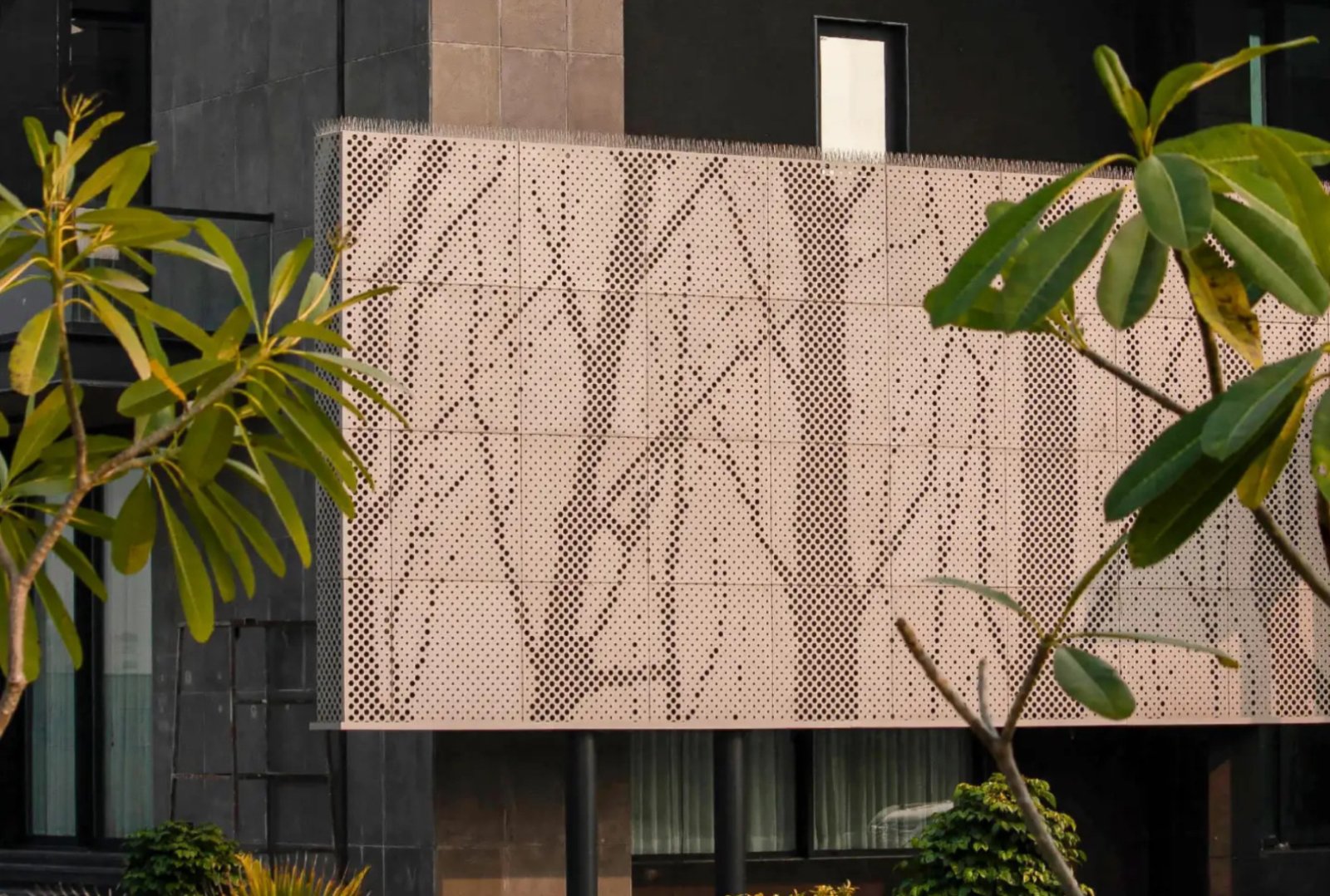
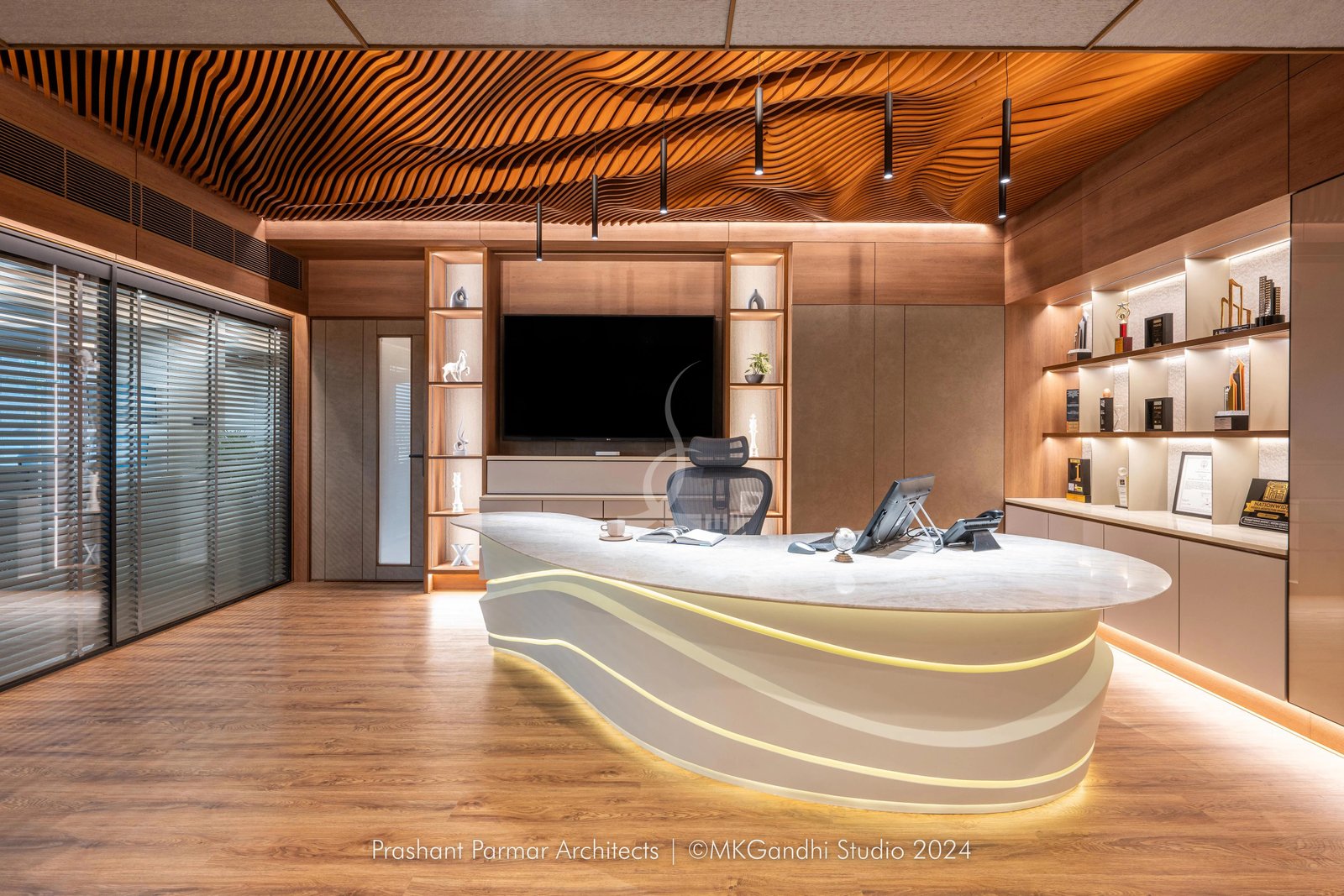
Image Selection → Image Processing → Pattern Development → Parametric Design → Facade Engineering → CNC Perforation → Panel Assembly → Installation
From Image to Architecture: Custom Perforated Aluminium Facade Screens
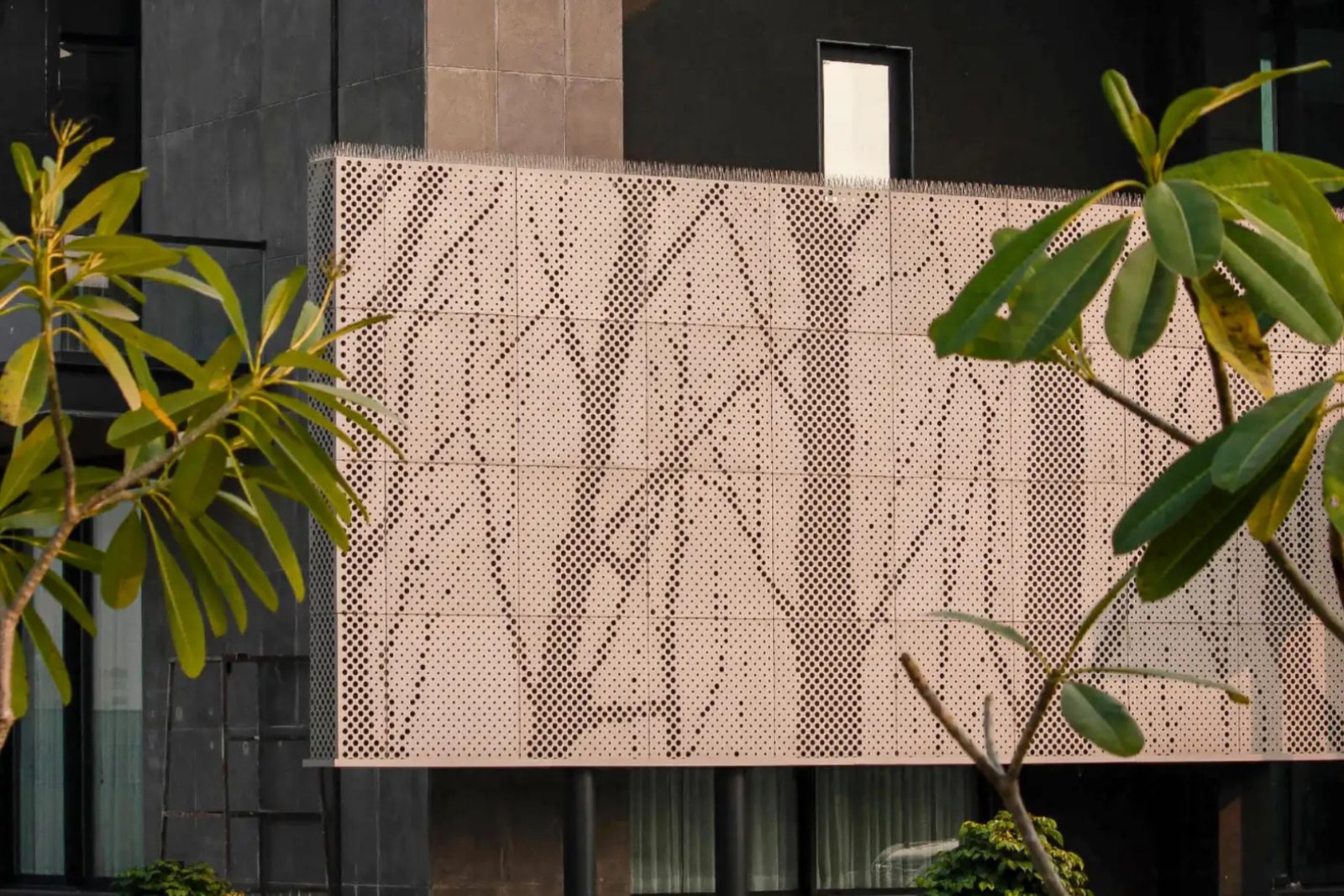
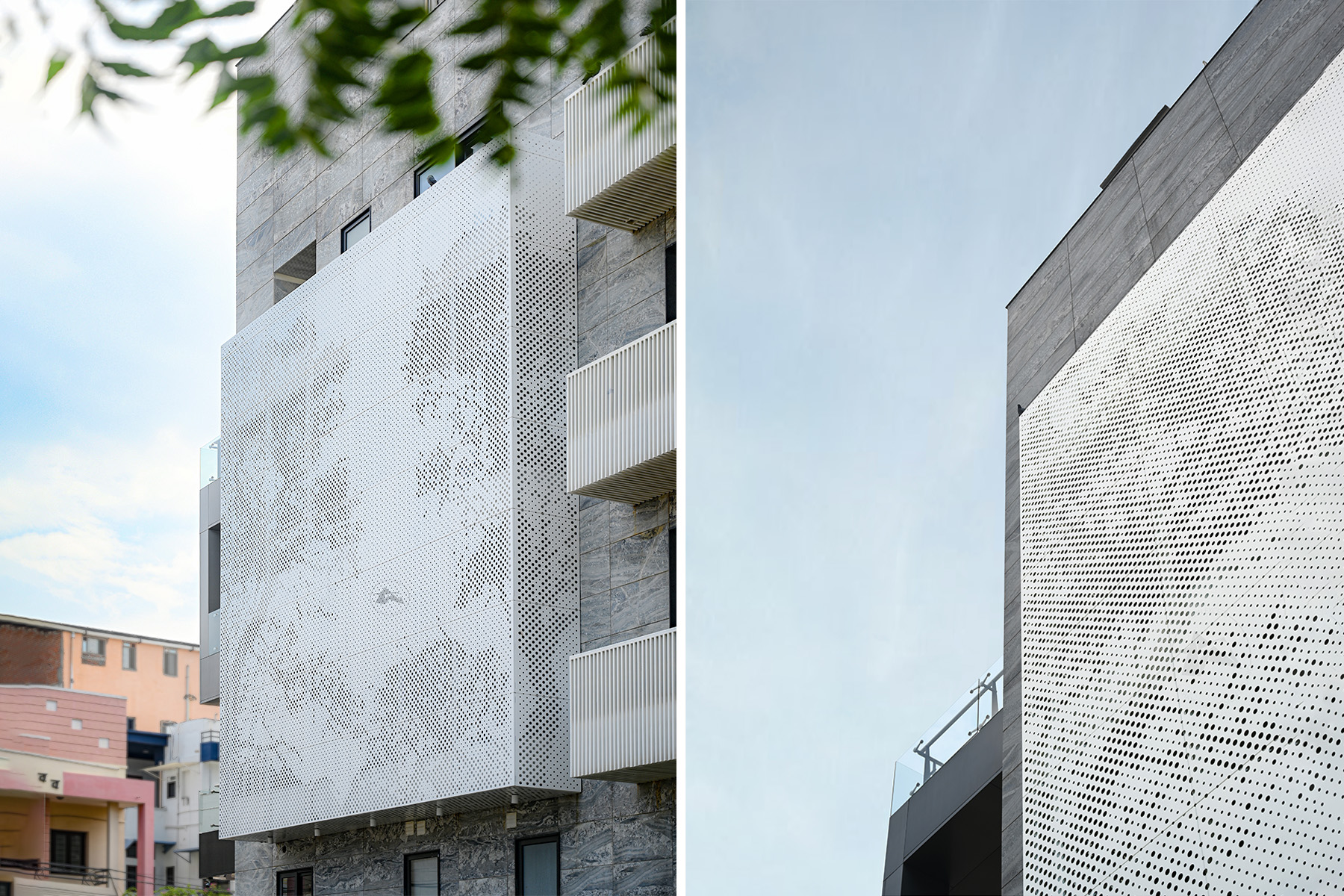
What if a forest, a sculpture, or the flowing movement of ocean waves could become part of a building's facade? With custom perforated aluminium screens, visual inspiration can be transformed into distinctive architectural patterns.
At Axes in Excess, we combine image processing, computational design, and CNC laser cutting to turn creative concepts into custom aluminium facade screens. The process goes beyond reproducing an image. It involves interpreting its visual character and translating it into geometry that works at architectural scale.
1. From Image to Digital Design
Every project begins with a visual reference. It could be a photograph of nature, an artistic silhouette, an abstract composition, or a custom graphic.
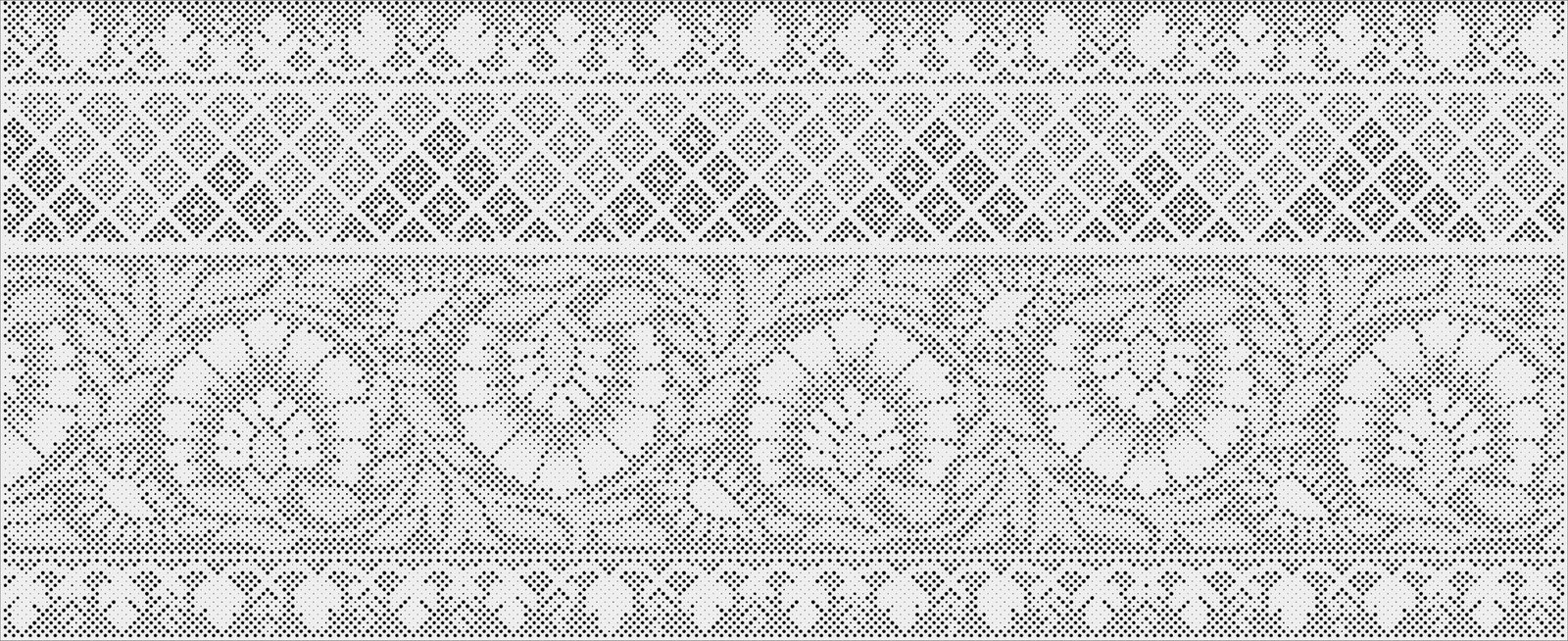
Using Photoshop, we prepare the image by refining its contrast, composition, and defining features. This creates a clearer foundation for developing the perforation pattern.
The prepared image then informs the design process in Rhino and Grasshopper. Depending on the project, we combine image sampling, extracted shapes, reference geometry, and custom modelling to develop the desired pattern.
The perforations may be circular, polygonal, organic, or a combination of shapes. The approach depends on whether the design aims to preserve recognisable imagery or create a more abstract interpretation.
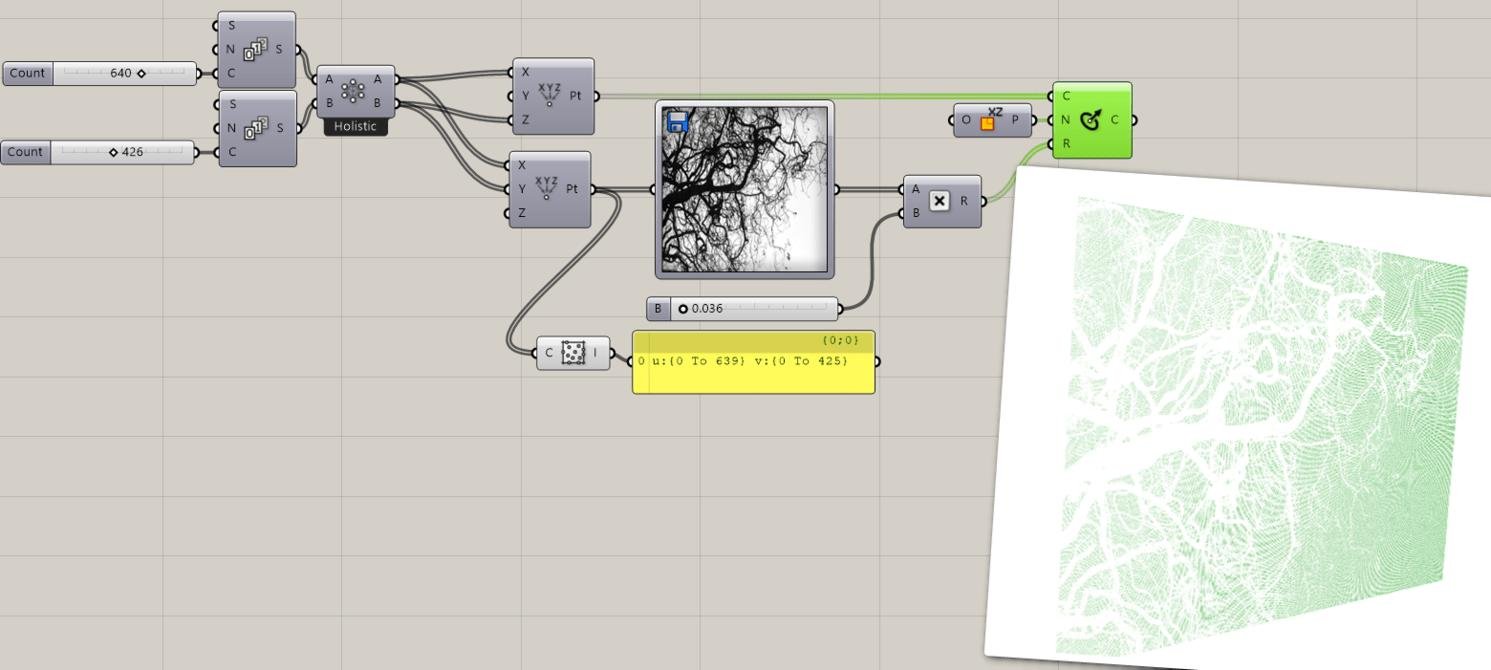
2. Computational Design Meets Creative Thinking
Grasshopper allows us to generate and control complex geometric patterns through parametric design. Parameters such as perforation dimensions and minimum spacing can be adjusted to suit the design and fabrication requirements.
However, computational design is only part of the process.
The generated geometry is refined manually in Rhino to improve the composition, clarify important forms, and achieve the intended visual effect.
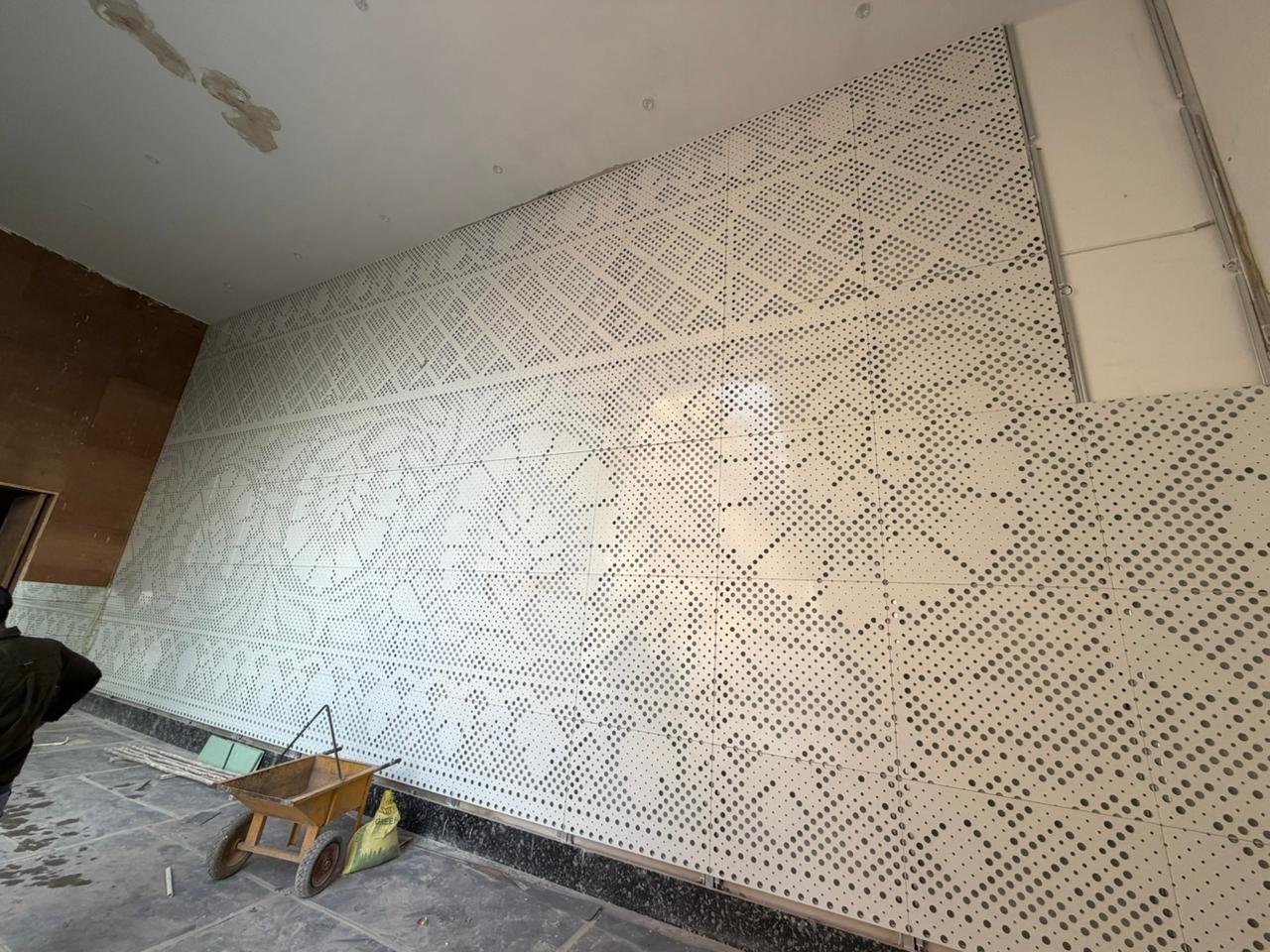
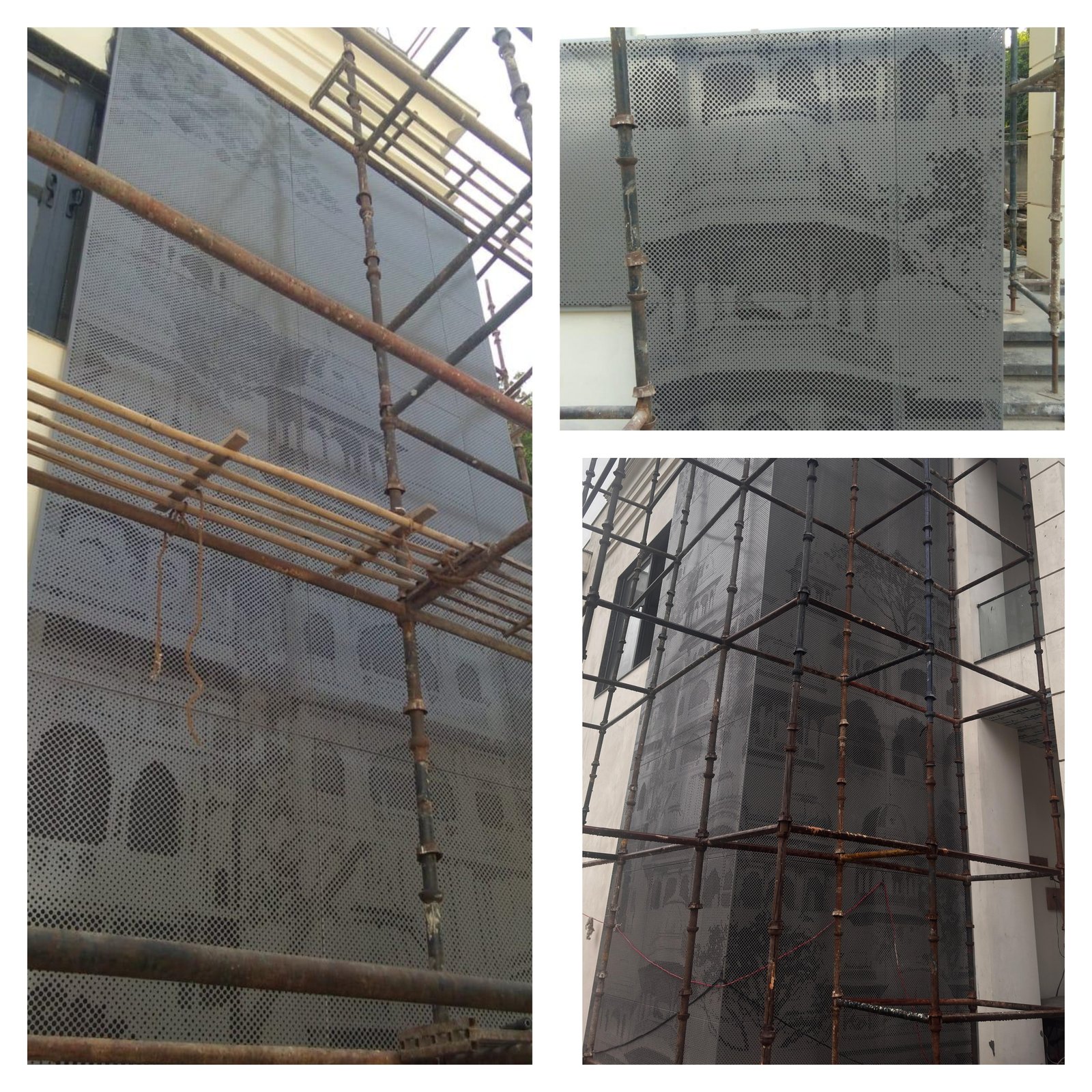
We also evaluate the pattern within a digital facade model, considering its appearance at building scale, continuity across the facade, potential light transmission, and integration with the overall architecture.
This combination of computational tools and design judgement helps transform an image into a considered architectural composition.
3. Engineering the Pattern for Aluminium
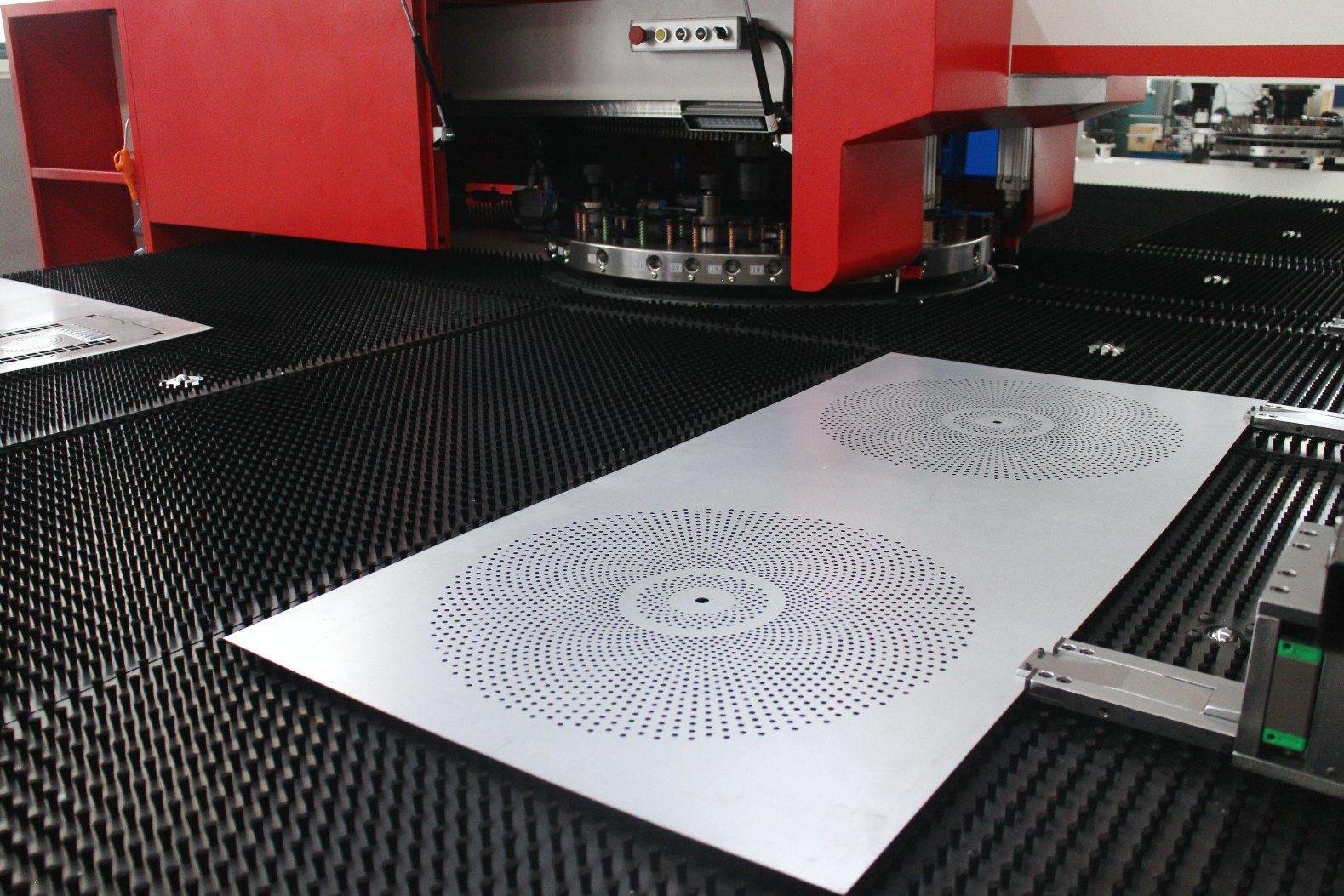
A digital pattern must work as a physical metal screen. The size, shape, and spacing of perforations influence the amount of aluminium remaining between openings and the practical requirements of fabrication.
Our design process incorporates geometric controls while accounting for material thickness, panel dimensions, edge conditions, and the intended application.
Once the geometry has been refined, it is exported directly from Rhino for CNC laser cutting in 2–3 mm aluminium sheets.
The final design must be suitable for the selected manufacturing process and assessed against the relevant engineering requirements. This ensures that visual intent and practical fabrication considerations are addressed together.
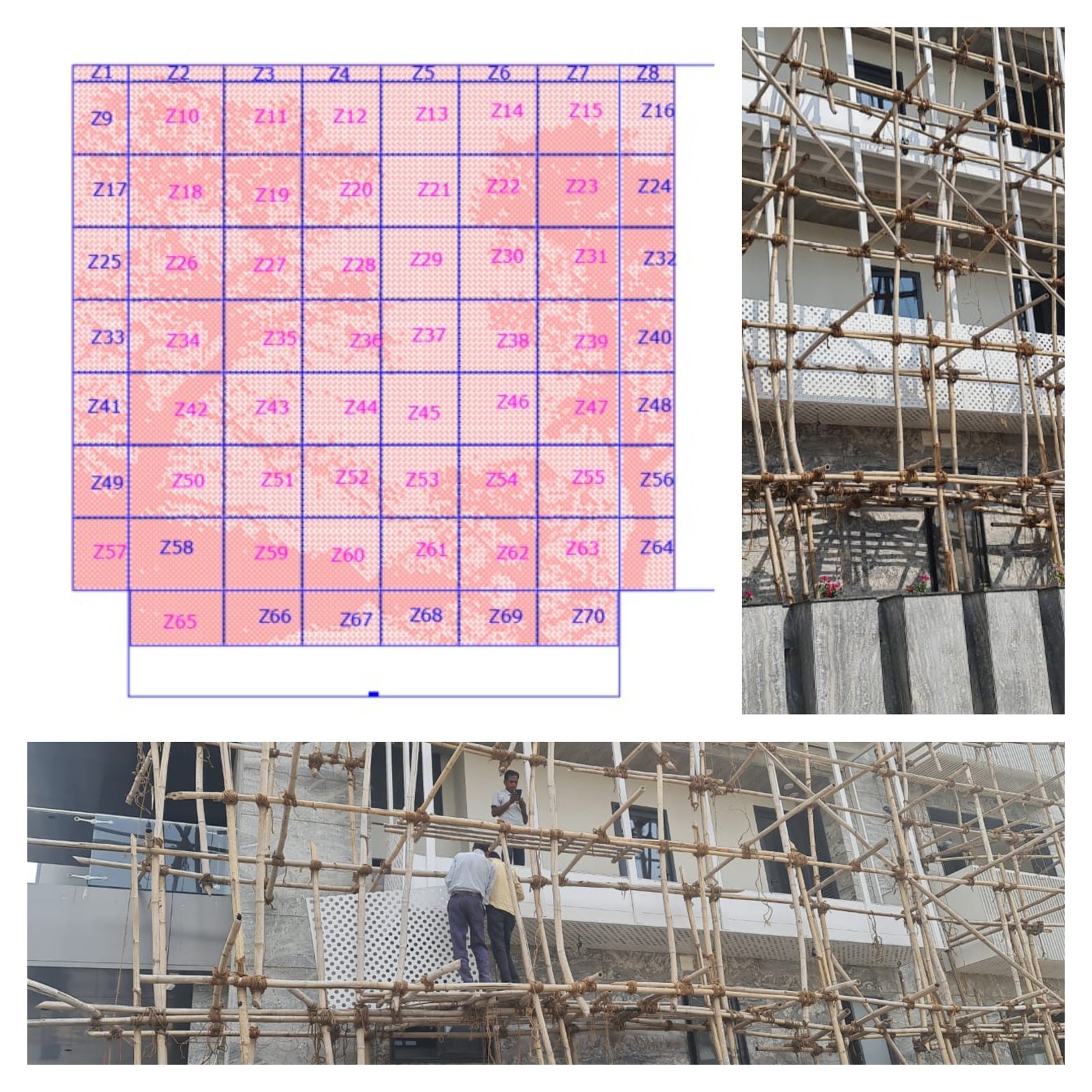
4. From Individual Panels to a Complete Facade
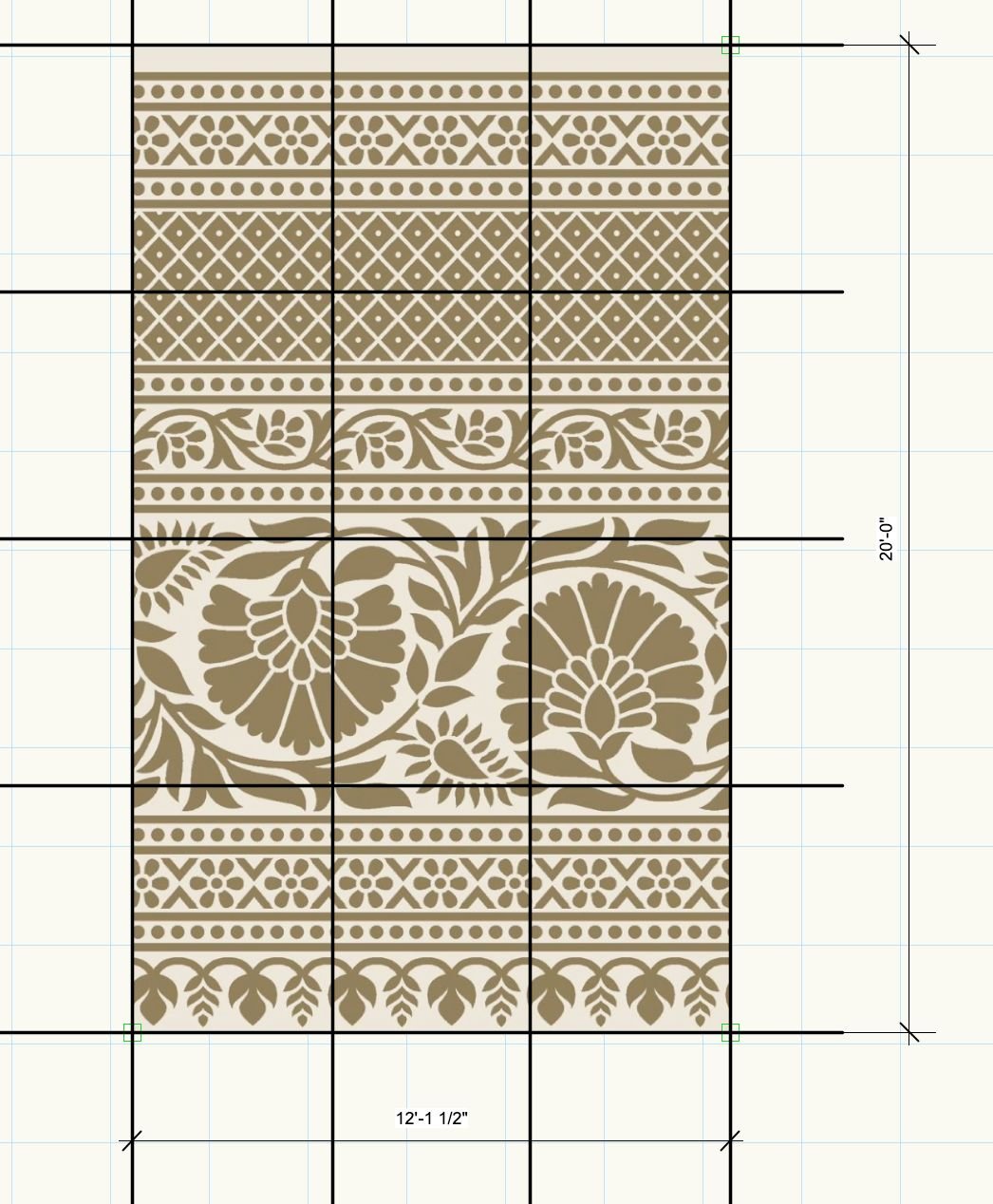
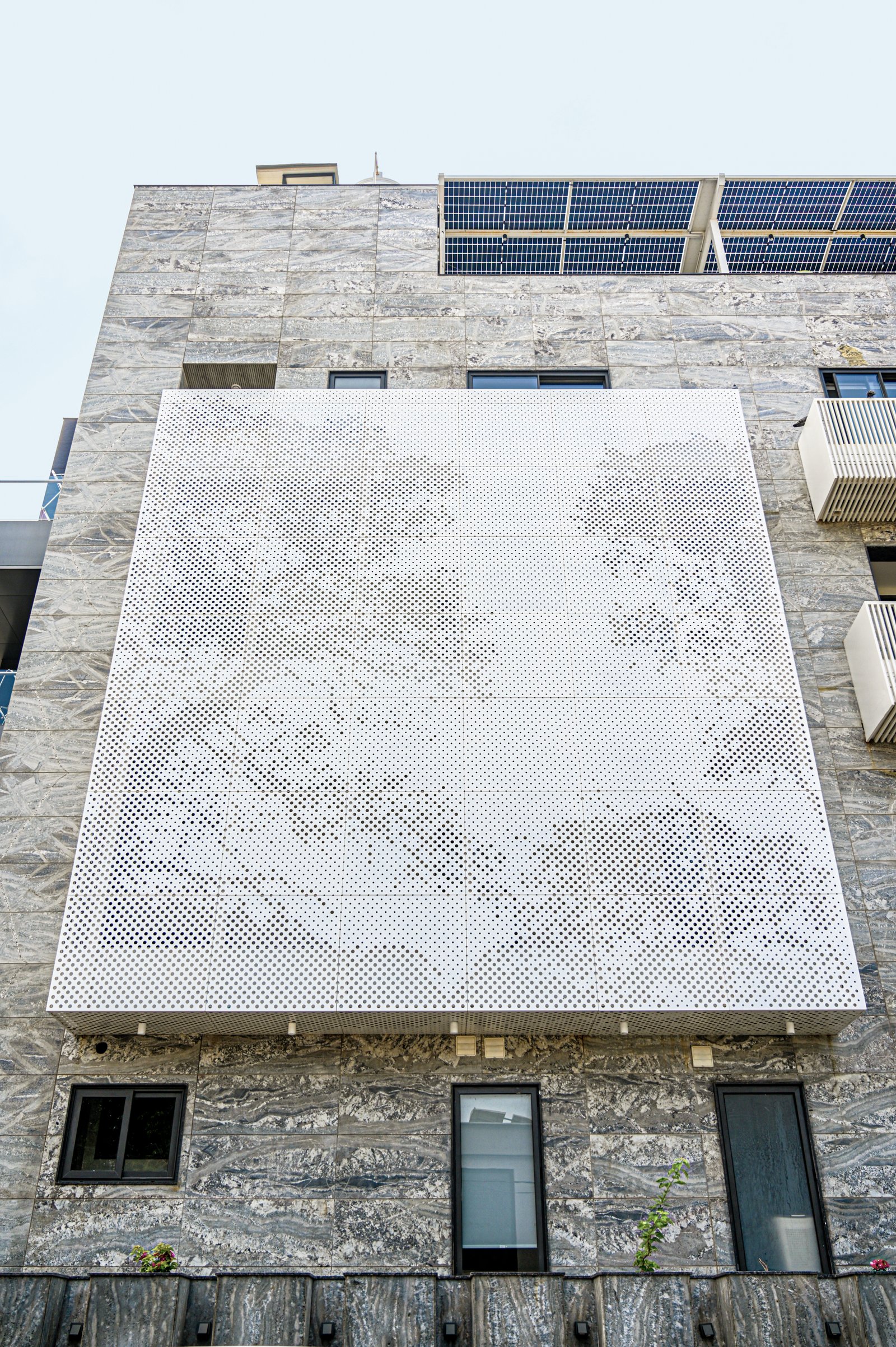
A perforated facade often consists of multiple panels that must work together as a coherent composition.
Panel dimensions, joints, fixing locations, and installation requirements can all influence the final appearance. For image-based designs, coordinating the pattern across panel boundaries is particularly important when the composition is intended to appear continuous.
Careful design coordination helps translate the digital pattern into a facade that responds to both the architectural vision and the practical demands of installation.
Conclusion: When an Image Becomes Architecture
Transforming an image into a perforated aluminium facade requires more than software or manufacturing technology alone. It brings together visual interpretation, parametric design, geometric refinement, and precision fabrication.
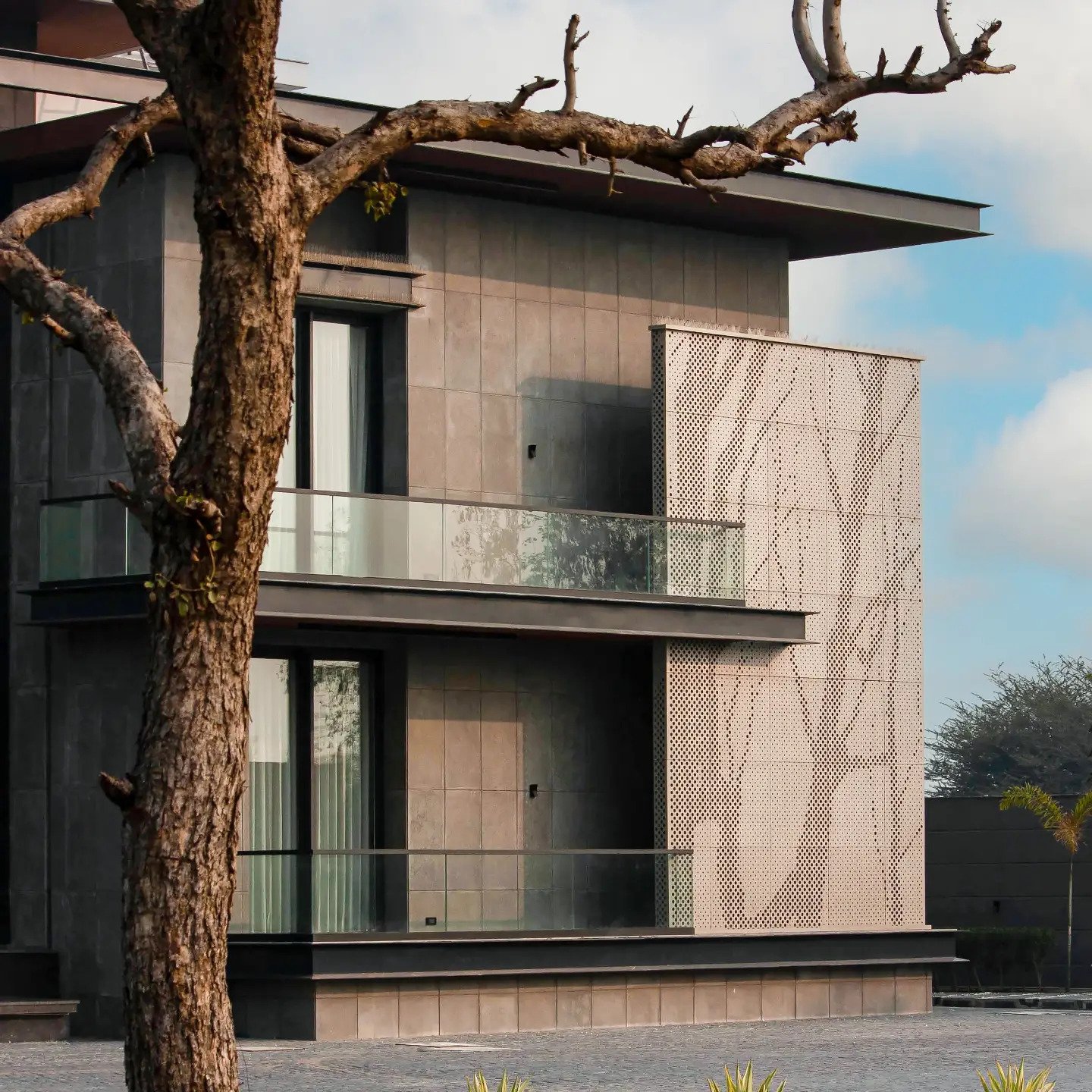
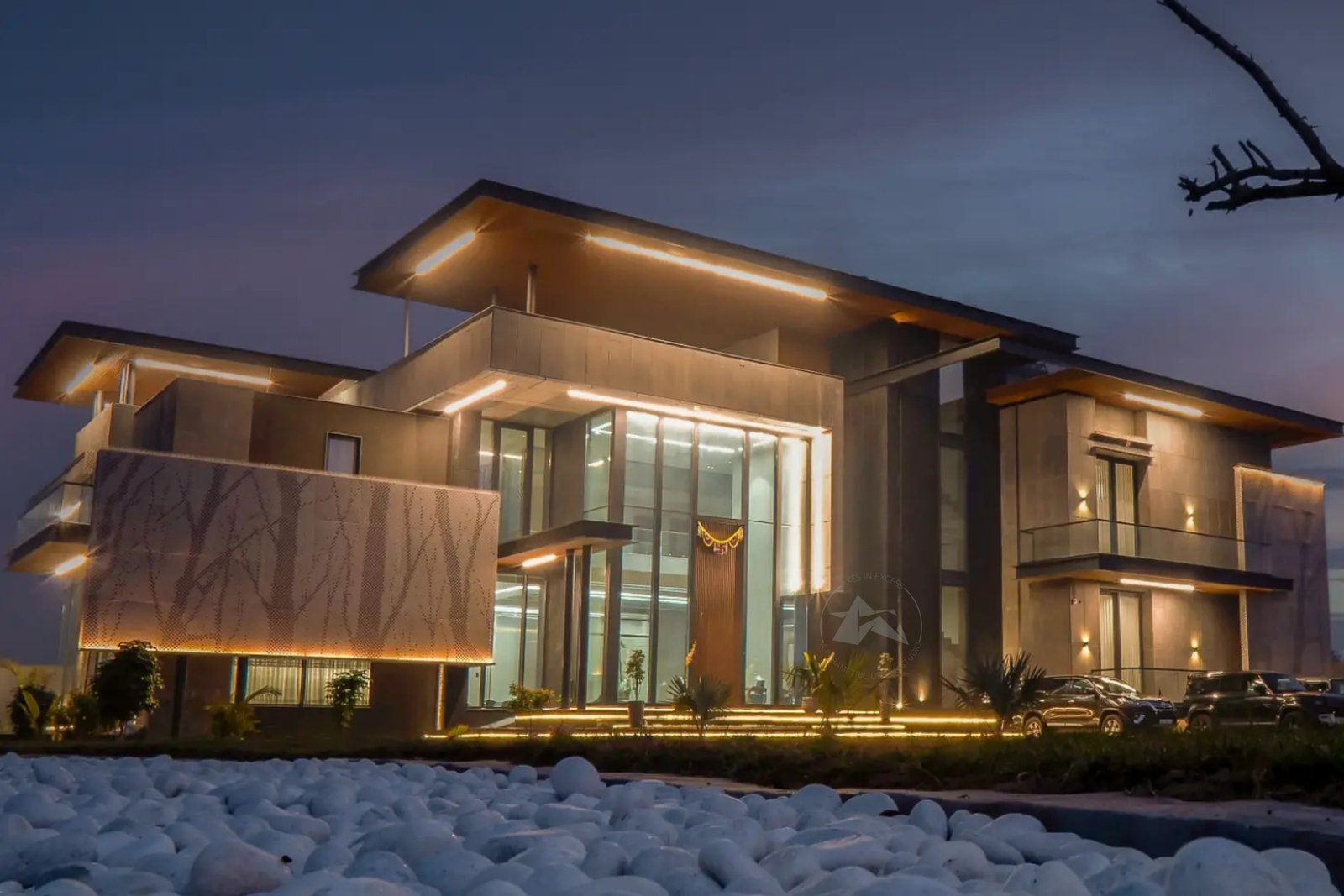
By combining Photoshop, Rhino, Grasshopper, and CNC laser cutting, Axes in Excess develops custom aluminium screens inspired by nature, art, and architectural concepts.
The result is more than a perforated metal panel. It is a visual idea translated into architecture.
Find Your Rep Get Inspired